Encapsulating a crawlspace is one of the most effective ways to protect a home from excess moisture, poor indoor air quality, and long-term structural damage. This often-overlooked area beneath a house can have a significant impact on energy efficiency, comfort, and even the health of occupants. When moisture and outside air are allowed to circulate freely below the home, they can lead to mold growth, wood rot, unpleasant odors, and higher utility bills. While the process of encapsulation may seem straightforward, achieving long-lasting results requires careful planning, proper materials, and attention to detail. The following three essential tips will help ensure your encapsulation project is successful and durable.
Choose the Right Materials and Vapor Barrier
The foundation of any effective encapsulation project lies in selecting the right materials. One of the most critical components is the vapor barrier. Low-quality plastic sheeting may be inexpensive, but it is far more likely to tear, shift, or degrade over time. A reinforced, heavy-duty polyethylene vapor barrier provides superior durability and moisture resistance, making it a worthwhile long-term investment.
Thickness and strength are important, but correct installation is just as vital. The vapor barrier should completely cover the ground and extend up the foundation walls, creating a continuous layer of protection. Seams must overlap adequately and be sealed with specialized tape or adhesive to prevent moisture from sneaking through. Corners, piers, and transitions are common problem areas, so extra care should be taken to ensure a tight, secure fit in these spots.
Insulation also plays a key role in overall performance. Moisture-resistant insulation materials such as rigid foam boards or closed-cell spray foam are commonly used because they help regulate temperature while resisting mold and water damage. When combined with a high-quality vapor barrier, proper insulation can significantly reduce heat loss, lower energy costs, and improve year-round comfort inside the home.
Address Moisture and Drainage Before Sealing the Crawlspace
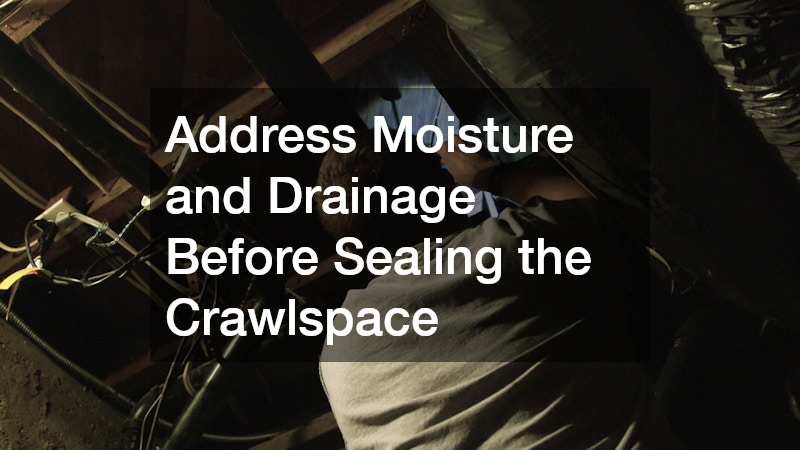
Encapsulation should never be performed without first addressing existing moisture problems. Sealing an area that already has water intrusion can trap moisture, leading to more severe issues such as mold growth and structural deterioration. Before installation begins, it is essential to identify and correct any sources of water entry.
Start by evaluating exterior drainage. Gutters and downspouts should direct water away from the foundation, and the ground around the home should slope outward to prevent pooling near the walls. Inside the space, look for standing water, damp soil, condensation on surfaces, or staining on foundation walls. These signs indicate that drainage improvements may be necessary.
In some cases, a perimeter drain system or sump pump may be required to manage groundwater effectively. These systems help collect and redirect water before it becomes a problem. Additionally, plumbing leaks or HVAC condensation lines should be repaired to eliminate internal sources of moisture.
Once water intrusion is under control, humidity management becomes the next priority. Even a sealed environment can accumulate moisture if humidity levels are not regulated. Installing a high-capacity dehumidifier designed specifically for below-floor environments helps maintain optimal humidity levels throughout the year. Proper moisture control before and after encapsulation ensures the system performs as intended and protects the home for the long term.
Ensure Proper Sealing, Vent Closure, and Ongoing Maintenance
A successful encapsulation depends on creating a truly sealed environment. This means closing and sealing all vents, gaps, and penetrations that allow outside air to enter. Older construction methods relied on vents for moisture control, but modern building science has shown that vents often introduce warm, humid air that worsens moisture problems rather than solving them.
Special attention should be given to sealing around plumbing lines, electrical wiring, ductwork, and access doors. These areas are common sources of air leakage and can compromise the effectiveness of the encapsulation if not properly sealed. Using durable sealants, gaskets, and airtight access doors helps maintain consistent conditions and improves overall energy efficiency.
While encapsulation systems are designed to be long-lasting, they are not completely maintenance-free. Periodic inspections are important to ensure everything remains intact and functioning properly. Homeowners should occasionally check for loose seams, small tears in the vapor barrier, or changes in humidity levels. Addressing minor issues early prevents them from developing into costly repairs.
Regular maintenance also provides peace of mind, ensuring the encapsulation continues to protect the home’s structure, indoor air quality, and energy performance. When properly sealed and maintained, the encapsulated area becomes a clean, dry, and stable part of the home rather than a source of ongoing problems.
Encapsulating a crawlspace is a smart investment that offers numerous benefits, including improved energy efficiency, better indoor air quality, and enhanced structural protection. By choosing high-quality materials, resolving moisture and drainage issues beforehand, and ensuring thorough sealing with ongoing maintenance, homeowners can achieve long-lasting results. These three essential tips provide a clear and practical roadmap for avoiding common mistakes and creating a healthier, more efficient living environment from the ground up.