It’s important to understand the importance of choosing the right home generator to ensure safety and reliability in times of power outages. A home generator provides an essential backup source of electricity during emergencies, ensuring that your daily activities continue without interruption.
How to Determine the Right Size for Your Generator?
Understand Your Power Needs
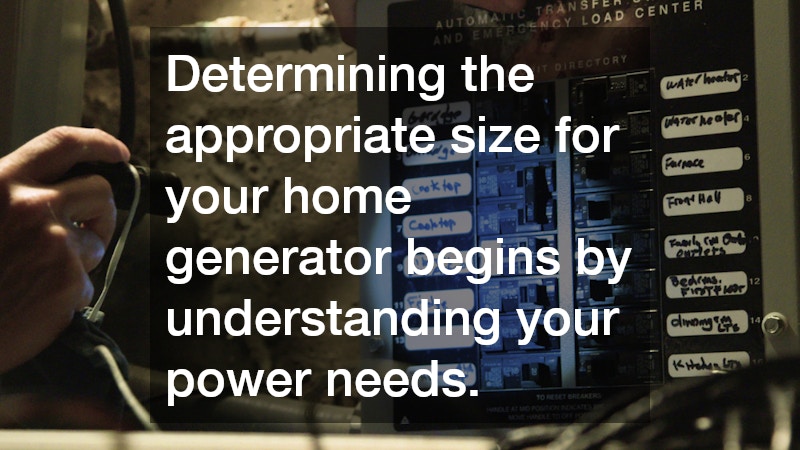
Determining the appropriate size for your home generator begins by understanding your power needs. Start by calculating the total wattage required for running essential home appliances and systems during an outage.
Consider devices such as refrigerators, sump pumps, and heating systems, which are crucial for maintaining household comfort and safety. Ensure to include additional wattage for startup surges, particularly for appliances with motors.
For example, a refrigerator might need 700 watts to run continuously, but during startup, it could require nearly double that amount. By accurately assessing your power needs, you can select a generator that effectively meets your household’s demands.
Charting a Load Evaluation
Creating a load evaluation chart helps prioritize essential versus non-essential appliances. During prolonged outages, this prioritization becomes crucial for managing your power consumption efficiently.
Start by listing all the critical appliances you cannot do without, ensuring they are covered by your generator’s capacity. Non-critical devices can be powered down or switched on intermittently to conserve power.
By charting a load evaluation, you not only optimize generator usage but also extend the operational efficiency during prolonged power failures. This conscious planning can lead to more strategic energy consumption.
What Types of Home Generators Are Available?
Portable Generators
Portable generators provide a convenient power solution with mobility and cost-effectiveness. Their main advantage is versatility, allowing homeowners to move them where power is needed the most.
However, portable generators typically run on gasoline, requiring regular refueling, which can be challenging during extended outages. They often produce less power than standby generators, making them suitable only for smaller electrical loads.
Despite these limitations, their ease of setup and relatively low initial cost make portable generators an appealing option for many households. They present a pragmatic solution where permanent installation isn’t feasible.
Standby Generators
Standby generators are permanently installed systems that automatically begin operating during a power outage. Their seamless operation provides peace of mind by reliably powering your home’s essentials.[standby generator fact]?.
These generators are generally connected to a home’s fuel supply, such as natural gas or propane, which eliminates the need for manual refueling. They are designed for longer-term outages, providing sufficient power for almost all household needs.
Standby generators require a higher initial investment compared to portable options, but their convenience and reliability can be worthwhile. For those seeking a robust, long-term solution, standby generators are an excellent choice.
What Should You Consider When Installing a Home Generator?
Installation Costs and Logistics
Installation costs for home generators can vary significantly depending on type and complexity. While portable generators require minimal setup, standby systems necessitate professional installation.
For standby generators, costs can include electrical system hookups, permits, and potential upgrades to your home’s electrical capacity. These expenses are crucial considerations when planning your budget.
Furthermore, maintenance costs should be factored into the overall expense, as regular servicing ensures longevity and optimal performance. Proper financial planning can ensure your generator remains a valuable asset.
Safety and Compliance Standards
When installing a home generator, it is vital to adhere to local regulations and safety standards. Compliance ensures the system is installed safely and effectively, avoiding hazards such as carbon monoxide leaks.
Safety protocols include appropriate placement, adequate ventilation, and ensuring all electrical connections are professionally managed. Engaging a certified technician for installation can help meet these requirements.
Additionally, obtaining the necessary permits and inspections ensures your generator setup adheres to local standards. Proper adherence to these guidelines is crucial for the safe and efficient operation of your generator unit.
Choosing the right home generator involves careful consideration of your power needs, types of generators available, and installation requirements. By evaluating these factors, you can make an informed decision tailored to your household requirements.
Both portable and standby generators offer unique benefits, and understanding your specific needs will guide your choice. Always factor in installation, compliance, and maintenance to ensure long-term generator efficiency and reliability.
Ultimately, the goal is to ensure peace of mind and continued comfort during unexpected power outages, with a generator solution that perfectly aligns with your lifestyle and budget.